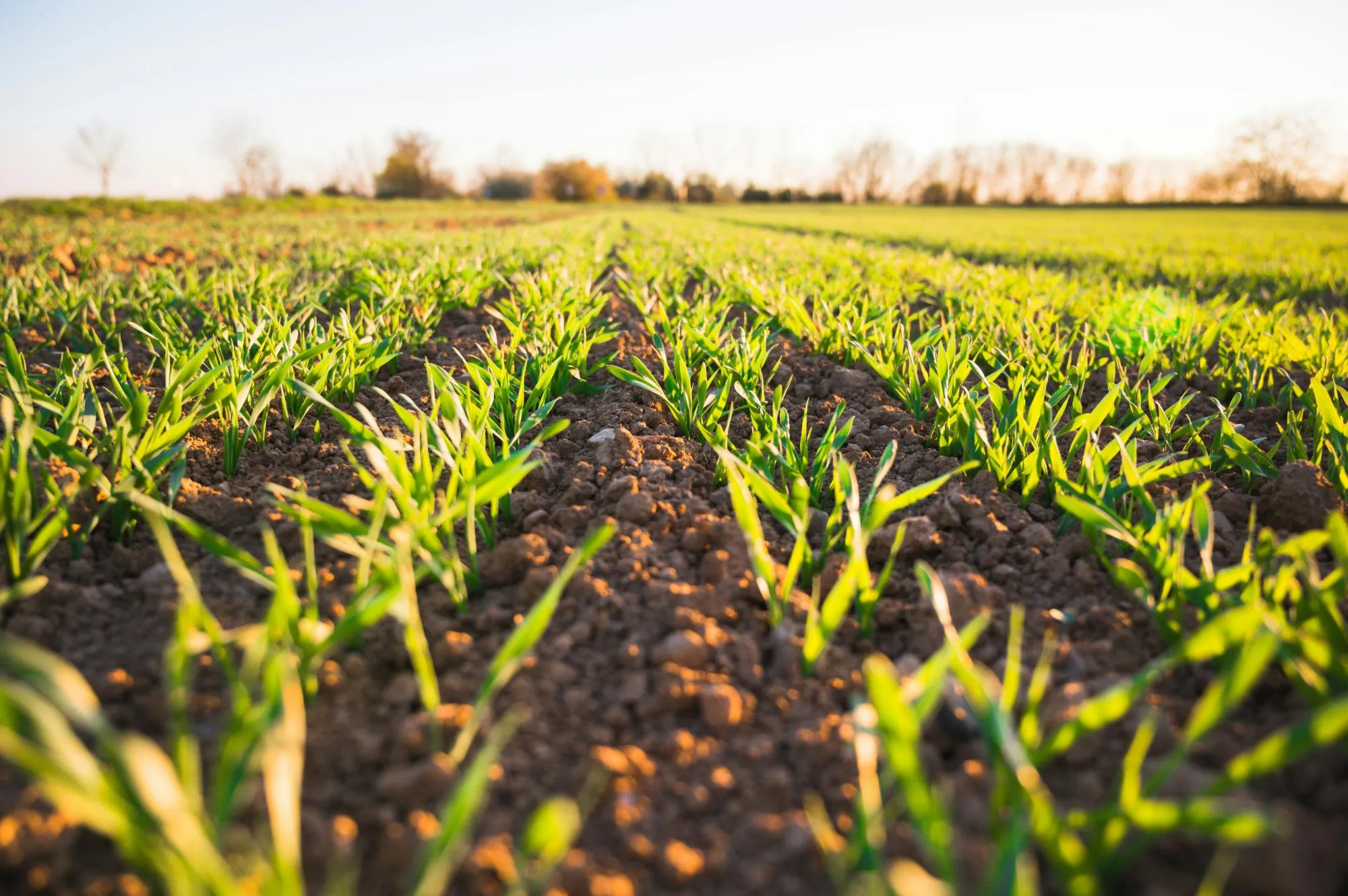
Every year across Europe, farmers watch their fields with increasing unease. Droughts last longer, hailstorms hit harder, and rainfall no longer comes when it is needed. A new study by EIB Advisory and the European Commission shows that adverse weather already costs the sector in the European Union more than €28 billion a year on average. Without action, these losses could reach €40 billion by 2050.
Yet, only around a third of these losses are insured. When disasters strike, many farmers struggle to recover, and without adequate protection, banks are reluctant to lend to them in the future. This cycle makes it harder for farmers to invest, weakens the sector’s competitiveness and puts Europe’s food security at risk.
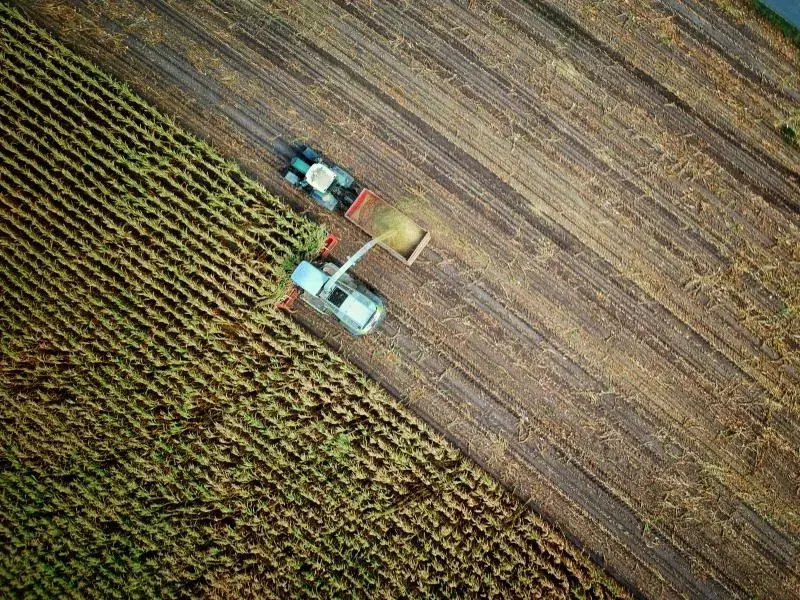
The EIB Group supports Europe’s agricultural and bioeconomy sector, investing around €4 billion a year to support things like rural infrastructure, innovation and measures to help farms adapt to climate change.
UNSPLASH
Helping farmers recover after climate shocks
The joint study by EIB Advisory and the European Commission outlines three areas where the European Union can make a difference:
-
Setting up a central reserve fund to help Member States respond more quickly when disasters strike, and share the risk with the capital markets.
-
Helping local banks keep lending to farmers even after severe losses.
-
Supporting more adaptation investment on farms, from better irrigation to more resilient crops, to reduce the impact of adverse climate events.
“The study goes beyond statistics,’’ says Frank Lee, Head of Financial Intermediary Advisory at the European Investment Bank. “It’s about understanding how climate shocks translate into economic losses for farmers, and how financial tools can help share that risk more fairly across society and with the capital markets.”
“The study is about understanding how climate shocks translate into economic losses for farmers, and how financial tools can help share that risk more fairly across society and with the capital markets.”
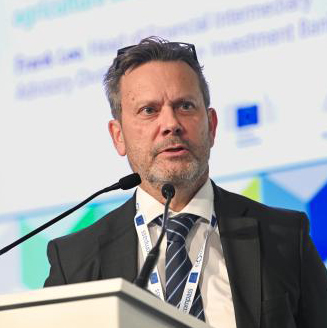 FRANK LEE
Head of Financial Intermediary Advisory, EIB
The study was carried out under the fi-compass platform, a joint initiative of the European Commission and the EIB that helps EU Member States and managing authorities design and implement financial instruments under the Common Agricultural Policy and other EU funds.
EIB Advisory experts looked at how Member States manage agricultural risk, working with insurance specialists from Howden Group to identify gaps in coverage and how to close them.
Sharing the risk
The study calls for public-private partners to work together to expand insurance coverage, share risks more effectively and help farms adapt to climate change.
“Pooling public and private finance to bridge the insurance gap will foster investment and predictability in the sector,” says Lee, “it will also contribute to food security, food sovereignty and generational renewal. We will be looking more into this, as a next step, with our colleagues from the Commission, Member State Ministries and the regulator in the coming months.”